Native Instruments, the company behind Kontakt, Massive, Traktor and Komplete, entered insolvency proceedings in early 2026. If your plug-in folder is full of NI, iZotope and Plugin Alliance products, that word sounds frightening. It is natural to worry about what happens next.
Here is the calm version. Your plug-ins still work today. The insolvency does not reach into your Mac and switch anything off. The thing that deserves your attention is narrower: the Intel-only plug-ins in that collection, and the macOS 28 deadline that retires Rosetta. This guide separates the two. It explains the most likely outcome for those plug-ins, and points you to where other affected users are comparing notes.
What happened to Native Instruments
Native Instruments GmbH, based in Berlin and founded in 1996, filed for insolvency. Preliminary proceedings opened in late January 2026, and a court-appointed administrator began reviewing the business. The main proceedings followed in the spring, the normal next step under German insolvency law. The music-technology site CDM broke the story.
Native Instruments is more than one brand. Over the past few years it grew into a group. It also owns iZotope, the maker of Ozone and RX, plus Plugin Alliance and Brainworx. So the news touches a large slice of the plug-in world, not a single product line.
The company has been clear that it keeps trading. In statements posted to the Native Instruments blog, the chief executive said products, downloads, activation and support all remain available. He added that the business is actively looking for new investment or a buyer. Plugin Alliance and Brainworx have said that their own legal entities sit outside the insolvency filing. For now, it is business as usual on their side. iZotope sits inside the group.
Insolvency is not the same as shutting down
The word insolvency does a lot of frightening work in a headline, so it is worth being precise. You will also see people ask whether Native Instruments has gone bankrupt, and in everyday language the two words get used interchangeably. They are not quite the same thing. Insolvency is a legal process for a company that cannot pay its debts on time. It is the start of a process, not the end of the company, and bankruptcy in the sense of a full wind-down is only one of the possible outcomes. From here, three paths are common: restructure and carry on, sell the brands to a new owner, or wind parts of it down.
A total shutdown is the least likely outcome. The products are widely used, the brands are valuable, and an administrator's main job is to preserve value. In practice, that means keeping the software alive and selling it as a going concern. A working business is worth far more than a switched-off one.
How did it get here? Reporting at the time, including from CDM, described a heavy debt load. The group had taken it on during a run of outside investment and acquisitions. An earlier agreed sale did not complete, and that is what led to the insolvency filing. None of that changes the day-to-day picture for you right now, but it explains why the future ownership question matters.
Where Rosetta Check comes in: Intel-only plug-ins and macOS 28
This is the part that affects your Mac. Apple is retiring Rosetta 2, the translation layer that lets Intel software run on Apple silicon. Intel software keeps working through macOS 26 and macOS 27, then stops on macOS 28, which is due in autumn 2027. You can read Apple's own timeline in Using Intel-based apps on a Mac with Apple silicon. Our plain-English summary is in what happens to your Intel apps in macOS 28.
The good news is that most current NI, iZotope and Plugin Alliance products are already native for Apple silicon, or universal. Kontakt, the latest Komplete instruments, recent iZotope releases and current Plugin Alliance builds run natively. Those are not the worry.
The worry is the long tail: older Intel-only versions you still have installed, and the handful of products that never received a native update. Audio plug-ins are one of the largest groups of Intel-only components our community catalogue still sees. We explored that pattern in the anatomy of the Intel long tail. If you have not updated in a while, some of your NI-group plug-ins may still be Intel-only.
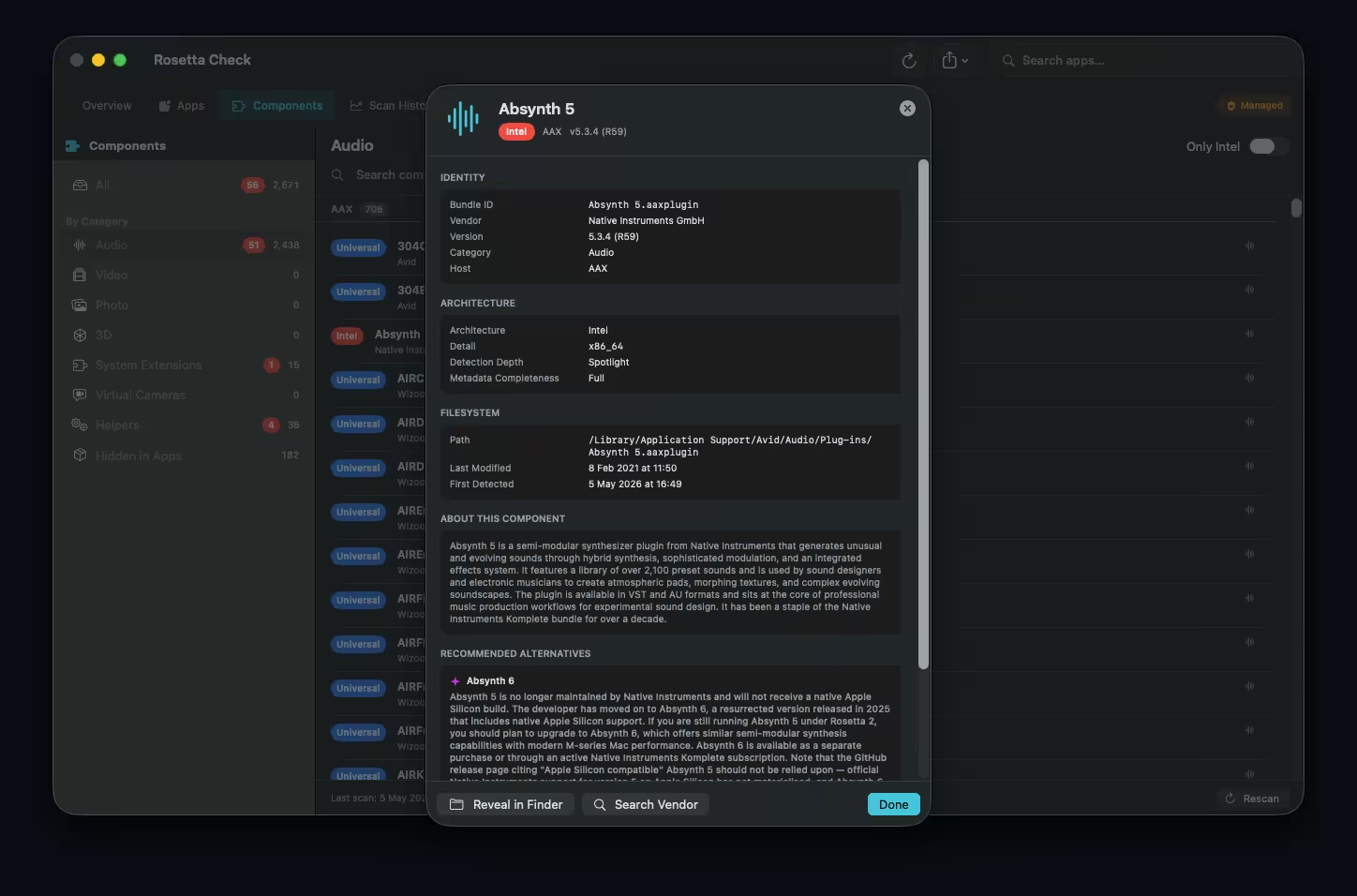
The insolvency makes this sharper for one reason. A native update only happens if someone funds the engineering work. While a company is restructuring or changing hands, work on older or less popular titles can pause. If a plug-in is still Intel-only and its native update never ships, macOS 28 is the point where it stops running. And no vendor fix is coming.
The most likely scenario for your Intel plug-ins
Nobody can promise an outcome while the process is live, but the realistic picture breaks down into three parts.
Right now, nothing changes. Native Access, the iZotope Product Portal and the Plugin Alliance installer all still work. You can download, install, authorise and reinstall exactly as before. This is the most important fact, and it is easy to lose in the noise.
The most likely medium-term outcome is continuity under new ownership. A restructuring or a sale that keeps the core products going is the usual result for a software business like this. The flagship products are the most likely to keep getting native updates: Kontakt, Komplete, Ozone, RX and the popular Plugin Alliance titles. They are exactly what a buyer is paying for.
The realistic risk to plan for is the long tail. Niche, older or discontinued plug-ins that are still Intel-only are the ones most likely to be left without a native build. Those are the titles to identify now and have a plan for, well before macOS 28.
There is also a quieter, longer-term point about activation. NI-group products authorise online, and some Plugin Alliance titles use iLok. Today those servers are up and there is no sign of that changing. The sensible, low-effort precaution is to keep your own copies of installers and your licence or serial details. Then you are never dependent on a download portal being there years from now.
What to do now
- Update everything to its latest version using the vendor's own free tools. That means Native Access for Native Instruments, the iZotope Product Portal for iZotope, and the Plugin Alliance installer for Plugin Alliance and Brainworx. The newest builds usually run natively already.
- See what is still Intel-only. Run Rosetta Check to list which of your installed plug-ins, in every format (AU, VST, VST3 and AAX), are still Intel. Our guide to finding Intel plug-ins, drivers and extensions shows where they hide.
- Back up your installers and licences now, while downloads and activation are working normally. Keep the installer files and a note of your serial or licence details somewhere safe.
- Plan replacements only for what is stuck. For any plug-in that is still Intel-only and that the vendor no longer updates, note it down. Line up a native alternative before macOS 28 in autumn 2027. You have time, so there is no need to rush.
- Be cautious with large pre-payments. Some users prefer to hold off on big upgrade or pre-order spends until the picture is clearer. That is a personal choice, not a prediction.
- Avoid unofficial copies. Cracked plug-ins are a security risk, and they do nothing to solve the Intel problem anyway.

Where to follow the story and talk to other users
This is a fast-moving situation. The best thing you can do is follow it from a few reliable places, not a single rumour.
- Official updates: the Native Instruments blog carries the chief executive's statements, and the Native Instruments site hosts the community forum and support pages.
- Reddit is the busiest place for day-to-day discussion. Start with r/NativeInstruments, and the wider production communities r/audioengineering, r/edmproduction and r/WeAreTheMusicMakers.
- Forums: KVR Audio and Gearspace both host long-running threads where producers compare notes.
- Plugin Alliance users have been getting updates through the Plugin Alliance Audiophiles group on Facebook. Plugin Alliance staff have posted there directly.
- News and comment: CDM, which broke the story, plus Bedroom Producers Blog and Synth Anatomy have all been following it closely, with active comment threads.
The bottom line
Insolvency is a scary headline, but it is a legal process, not an off switch. Your NI, iZotope and Plugin Alliance plug-ins keep working today, and the most likely outcome keeps the popular ones alive under new ownership. The part that needs your attention is the Rosetta deadline, not the company news. Find the plug-ins that are still Intel-only, update what you can, back up the rest, and plan replacements only for anything left without updates.
Want to see every Intel app, driver and plug-in on your Mac in one place? Rosetta Check scans your whole system. Our guide to finding Intel plug-ins, drivers and extensions shows what else to look for beyond the app list.
Frequently asked questions
Did Native Instruments go bankrupt?
Not exactly. Native Instruments entered insolvency proceedings in early 2026. Insolvency is a legal process for a company that cannot meet its debts on time, and it often leads to restructuring or a sale rather than closure. The company has said it continues to trade, and that products, downloads, activation and customer support all remain available.
Will my Native Instruments plug-ins stop working?
Not because of the insolvency. Plug-ins already installed on your Mac keep working, and you can still download and authorise them. The separate issue is macOS 28, which retires Rosetta in autumn 2027 and will stop any plug-in that is still Intel-only. Most current NI products are already native for Apple silicon, so the risk is limited to older Intel-only builds and a few titles that never got a native update.
Are iZotope and Plugin Alliance affected too?
They are part of the wider Native Instruments group. Plugin Alliance and Brainworx have said their own legal entities sit outside the insolvency filing, while iZotope is inside the group. In practice all of them are still trading, with downloads and activation working normally.
What should I do with my Intel-only NI plug-ins before macOS 28?
Update each one to its latest version using the vendor's own free installer, which is Native Access for NI, the iZotope Product Portal for iZotope, and the Plugin Alliance installer for Plugin Alliance and Brainworx. The newest builds are often already native. Use Rosetta Check to see which plug-ins are still Intel-only, back up your installers and licence details while everything still works, and plan a native alternative for anything that is no longer being updated.
Where can I discuss the Native Instruments insolvency with other users?
The busiest places are Reddit, with the r/NativeInstruments subreddit and the wider production communities, the KVR Audio and Gearspace forums, and the comment threads on music-technology sites such as CDM, Bedroom Producers Blog and Synth Anatomy. Native Instruments posts official updates on its own blog.